About the Cayman Islands
Local Animals
An overview of the remarkable wildlife found across the Cayman Islands.

An overview of the remarkable wildlife found across the Cayman Islands.
Although the Cayman Islands may not have the dense rainforests seen elsewhere in the Caribbean, they support a surprisingly rich variety of wildlife, including several endemic and protected species. From coastal waters to inland forests and wetlands, the Islands provide habitats for reptiles, birds, mammals and marine life unique to this part of the world.
Below are some of the most notable animals you may encounter.
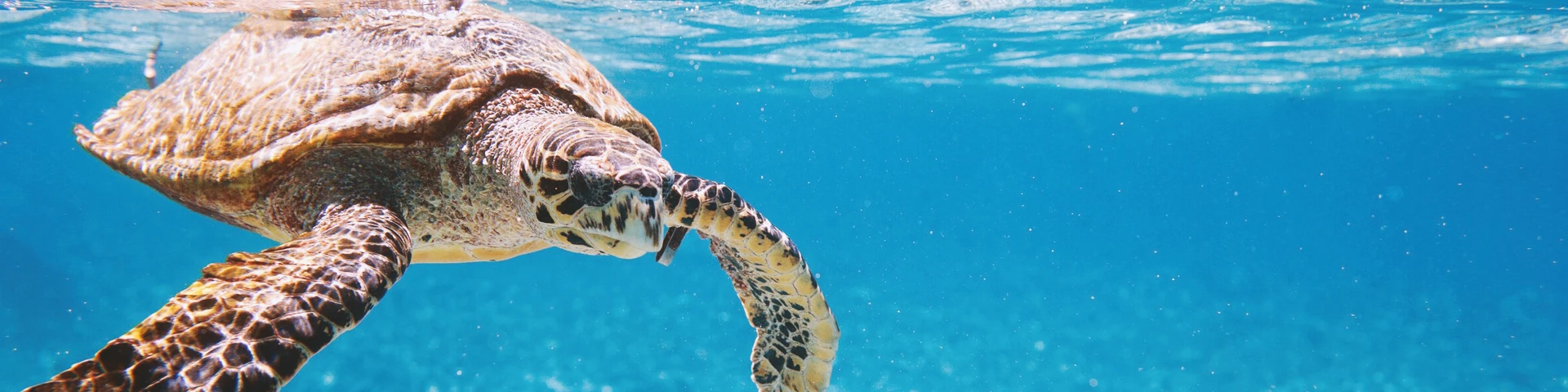
Sea turtles once thrived in such great numbers in Cayman waters that Christopher Columbus named the islands Las Tortugas after observing them in 1503. The Islands’ geography provides ideal nesting conditions, with low, sandy beaches suitable for laying eggs and sheltered lagoons rich in seagrass — a primary food source for herbivorous Green Turtles.
Today, several species of sea turtle continue to nest in Cayman, and conservation efforts remain vital to protecting their populations.
The agouti — sometimes called the “Cayman rabbit” — is often mistaken for a native species. In fact, this large rodent was introduced from Central America in the early 20th century, originally as a food source.
Agoutis typically live in monogamous pairs and feed on fruits and seeds, playing an important ecological role as seed dispersers. Scientists believe they may now occupy an ecological niche once filled by the hutia, a native species that disappeared shortly after European settlement.
These shy animals are rarely seen for long, as they quickly retreat into dense vegetation. Lucky visitors may spot one near the Mission House, along the Mastic Trail, or within the grounds of the Queen Elizabeth II Botanic Park.
Four species of snakes inhabit the Cayman Islands. All are non-venomous and pose no danger to humans. Each island supports its own unique subspecies, making Cayman’s snakes particularly significant from a conservation perspective.
The most commonly encountered is the Cayman Racer, a slender brown snake with a distinctive pink underside. More elusive is the Cayman Ground Boa — often called the “Friendly Snake” or “Lazy Snake” — a small, docile boa species. The Islands are also home to a rare mangrove-dwelling water snake and a burrowing blind snake that is seldom observed.
These reptiles play an essential role in maintaining ecological balance and should be respected and left undisturbed.
The hickatee is a freshwater turtle species found in ponds and brackish wetlands throughout the Islands. Often seen basking on logs, hickatees quickly slip into the water when approached.
They are omnivorous, feeding on aquatic vegetation and insects, and may live for 25 to 30 years. The lack of fossil evidence suggests that hickatees were likely introduced centuries ago, possibly by early settlers or indigenous Caribbean travellers.
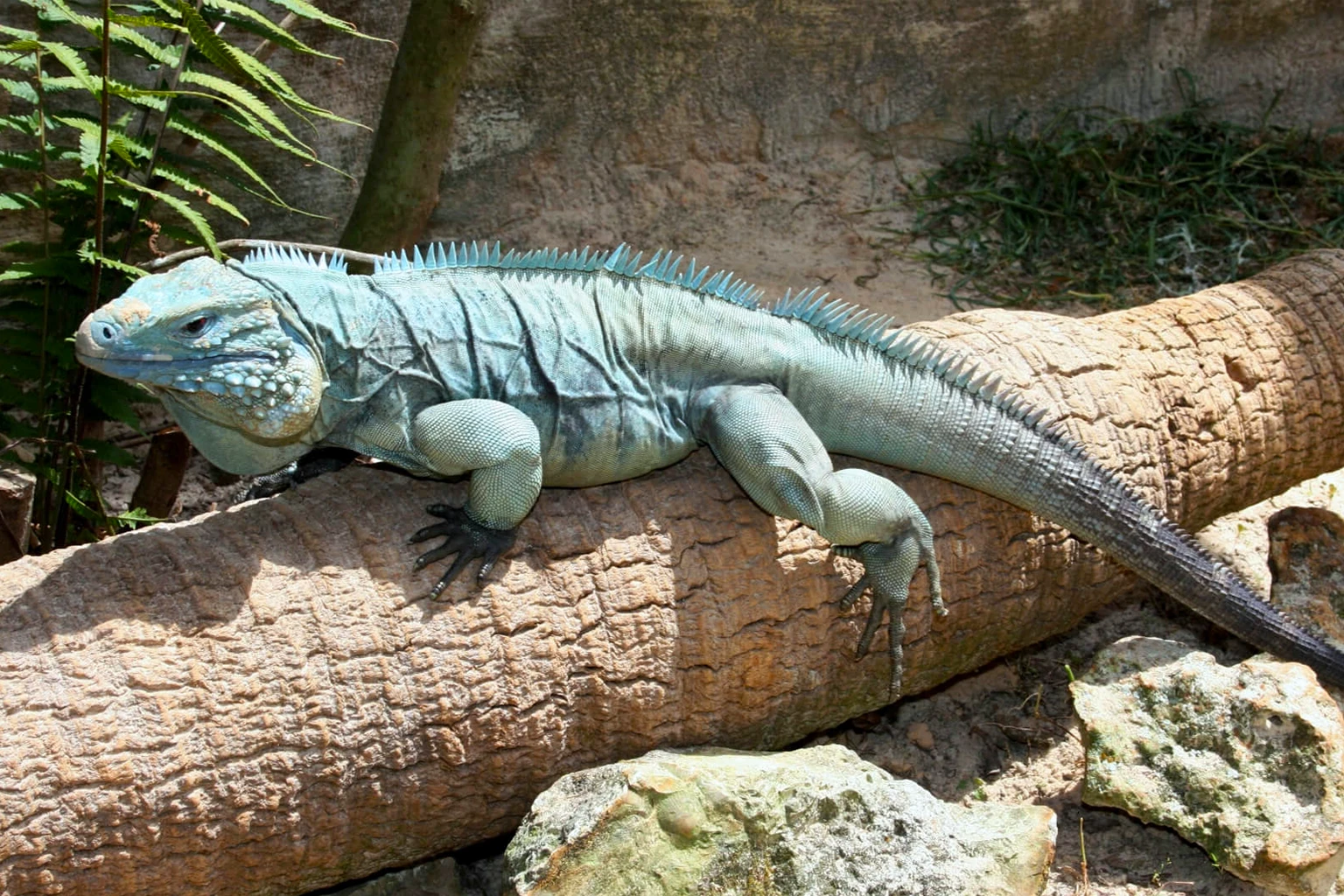
Three types of iguana are found across the Cayman Islands:
The Blue Iguana is an endangered species endemic to Grand Cayman. Recognisable by its striking bluish-grey colouring, this large reptile can reach lengths of up to five feet. By 2002, the wild population had declined to approximately a dozen individuals. Thanks to the National Trust’s captive breeding and release programme at the Queen Elizabeth II Botanic Park, more than 1,200 have since been reintroduced into the wild.
The Green Iguana, also known as the Common Iguana, is considered an invasive species. Its rapid population growth has posed a threat to the native Blue Iguana. A government-led cull programme has significantly reduced their numbers in recent years.
Native exclusively to Cayman Brac and Little Cayman, the Sister Islands Rock Iguana is a protected species. While the population on Cayman Brac remains small, Little Cayman has seen encouraging improvements, partly due to feral cat control efforts. Drivers on Little Cayman are reminded to exercise caution, as iguanas are known to cross roads freely.
Bats are the only mammals native to the Cayman Islands. Nine species have been recorded, all considered rare or very rare. One species is found nowhere else in the world except Grand Cayman. Bats play a crucial ecological role in insect control and pollination and are completely harmless to humans.
More than 200 bird species have been recorded across the Islands, with around 50 resident populations. There are five seabird colonies and seven designated bird sanctuaries.
Species commonly observed include bananaquits, frigatebirds, boobies, herons, egrets, ducks, sandpipers and terns. Birdwatchers often visit Cayman Brac and Little Cayman for particularly rewarding sightings.
The Grand Cayman Parrot and the Cayman Brac Parrot are endemic to their respective islands and are both protected species. Their vibrant green plumage and white eye markings allow them to blend seamlessly into surrounding foliage, making them easier to hear than to see.
The National Trust for the Cayman Islands plays a vital role in protecting the Islands’ natural and historic heritage. Through conservation programmes, research and education initiatives, the organisation works closely with schools and communities to promote environmental stewardship and awareness.
While Cayman’s marine life often captures the spotlight, the terrestrial ecosystem is equally diverse. Wildlife enthusiasts may wish to visit the Cayman Turtle Centre, hike the Mastic Trail, explore the Cayman Parrot Sanctuary, or stroll through the Queen Elizabeth II Botanic Park — each offering opportunities to experience the Islands’ natural environment up close.